
中国湿地保护:学习与友谊之旅
By Ernest Kiplangat Ronoh
Senior Research Scientist – Hydrology
Kenya Forestry Research Institute.
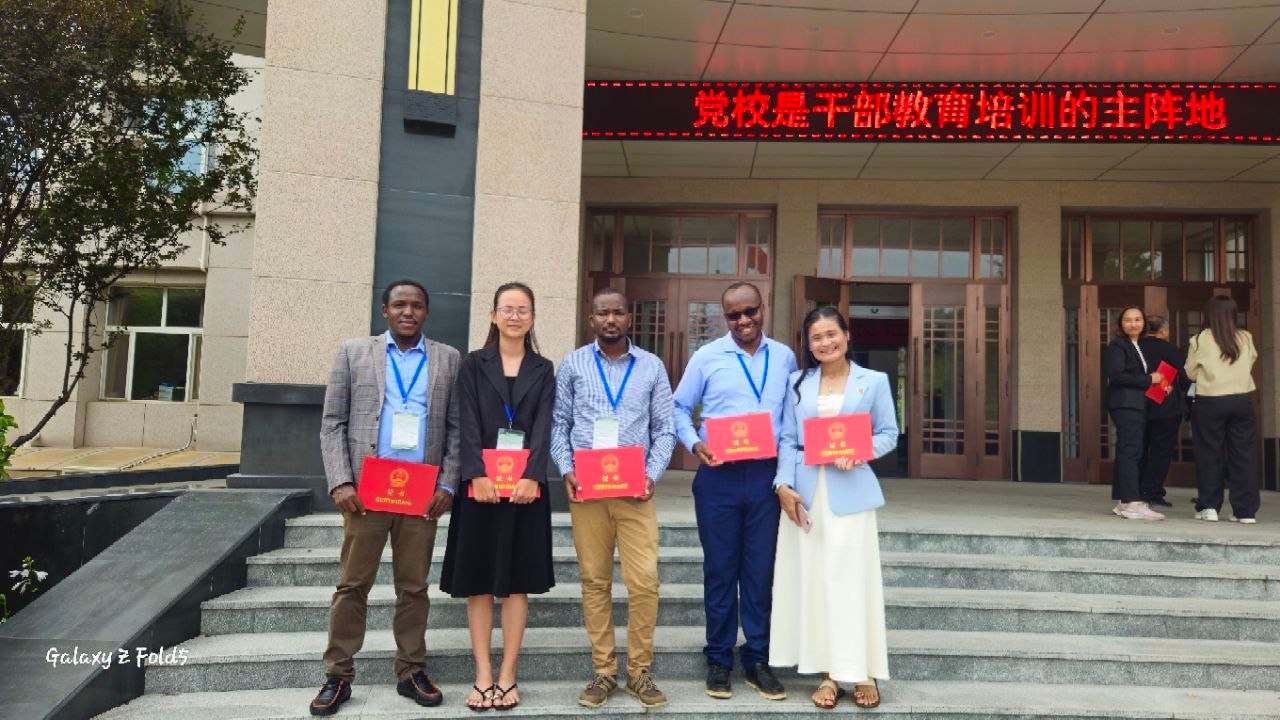
It was a great privilege to participate in the Seminar on Wetland Protection and Ramsar Implementation for Developing Countries, organized by the National Academy of Forestry and Grassland Administration (NAFGA) in Beijing, China, from 22 July to 4 August 2026.
The seminar was both professionally enriching and personally memorable. From the warm reception and excellent hospitality at NAFGA to the high-quality lectures delivered by distinguished experts, the programme provided an exceptional platform for learning, reflection and international knowledge exchange.
The seminar addressed important themes including wetland conservation and management, implementation of international wetland commitments, development of protected-area systems, mangrove ecology, blue carbon, climate-change response, ecological poverty alleviation and waterbird conservation.
For me, the experience was particularly relevant because wetlands sit at the intersection of water resources, biodiversity, forestry, climate resilience and community livelihoods. The lessons from China provided many ideas on how science, policy, planning, restoration and community participation can be better integrated in the management of wetlands and associated landscapes.
Learning and Hospitality at NAFGA, Beijing
Our stay at the National Academy of Forestry and Grassland Administration was an experience in itself. The Academy provided magnificent lecture, conference and accommodation facilities that created a highly conducive environment for learning and interaction among participants from different developing countries.
NAFGA has extensive experience in international forestry and environmental capacity building. Since 2007, it has organized China-aid training programmes covering sustainable forest management, biodiversity conservation, national parks, climate change, wildlife protection and other areas of natural-resource governance.
The lectures gave us an opportunity to appreciate China's approaches to environmental governance, wetland protection, ecological restoration and climate action. Equally valuable were the discussions among participants, which allowed us to compare experiences from different countries and identify areas where greater international cooperation could strengthen wetland conservation.
No visit to Beijing would have been complete without experiencing one of the world's most remarkable historical landmarks—the Great Wall of China. Walking along this magnificent structure was unforgettable. Beyond its enormous scale and beauty, it provided a powerful reminder of China's long history, engineering ingenuity, cultural heritage and capacity to undertake projects that transcend generations.
Wuhan: Where Nature, Planning and Development Meet
One of the greatest highlights of the programme was our field visit to Wuhan City in Hubei Province. The seminar programme specifically incorporated Wuhan as a field-learning destination because of the city's practical and policy experience in strengthening wetland ecosystem conservation.
Wuhan offered an impressive combination of environmental conservation, modern infrastructure, urban planning, history and natural beauty.
At the magnificent Yellow Crane Tower, we experienced one of China's most celebrated cultural landmarks while enjoying spectacular views of the city and the Yangtze River landscape.
The city's clean river channels and waterfront environments were particularly interesting from a water-resources and environmental perspective. They demonstrated how urban water systems can become important components of city planning, ecological restoration and public recreation when properly managed.
Wuhan's enormous bridges were equally impressive. Crossing the broad river systems while observing the city's mega bridges, modern transport infrastructure and large architectural developments illustrated the remarkable scale at which infrastructure and urban development are being undertaken.
Yet what impressed me most was that the experience was not limited to infrastructure.
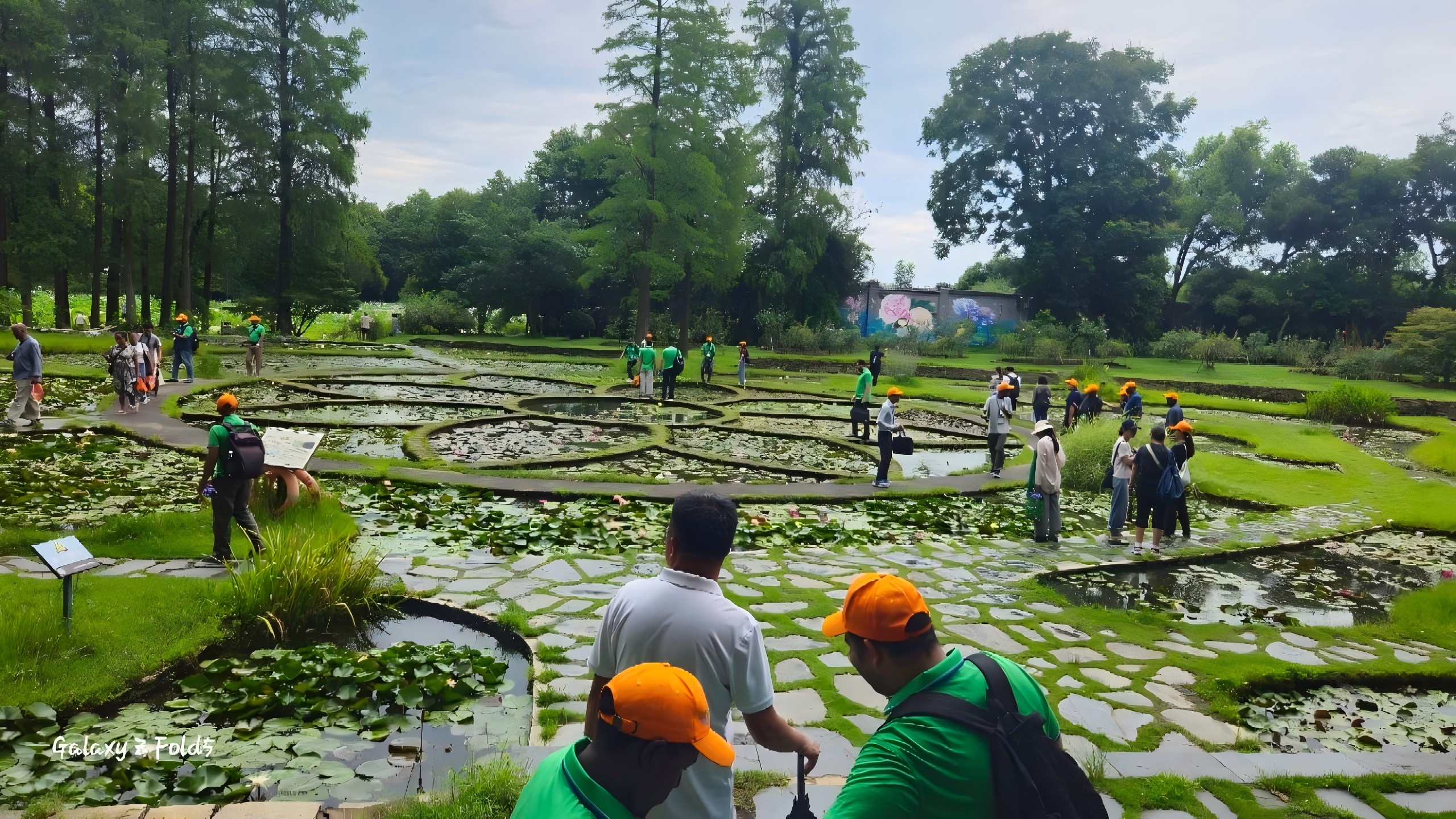
Our visit to the Wuhan Botanical Garden offered a magnificent illustration of the importance of plant conservation, scientific research, environmental education and the preservation of biological diversity. The diversity of vegetation, carefully managed landscapes and integration of science with public environmental awareness made the visit especially memorable.
The beautiful East Lake was another outstanding experience. Its vast waters, green surroundings and recreational landscapes highlighted the immense ecological, cultural and social value that healthy urban wetlands and lakes can provide.
Our visit to the Mountain Park further demonstrated how green spaces can be preserved within and around rapidly developing urban areas, providing important ecological functions while improving the quality of life for residents.
Learning from History and Planning for the Future
The programme also allowed us to appreciate China's rich cultural history through our visit to an Wuhan City Museum. The archaeological heritage and carefully preserved historical materials provided fascinating insights into China's long civilization and demonstrated how heritage conservation can complement modern development.
Another particularly informative visit was to the Wuhan Citizens Home. It provided an opportunity to appreciate the importance of long-term urban planning, spatial organization and coordinated development.
For those of us working in natural-resource and environmental management, such planning has an important lesson: sustainable cities cannot be separated from the management of their rivers, lakes, wetlands, forests, green spaces and surrounding catchments.
The future of environmental management will increasingly require planners, hydrologists, foresters, ecologists, engineers, communities and policymakers to work together rather than treating these sectors independently.
Wetlands as Natural Infrastructure
One of the strongest messages I carried from the seminar is that wetlands should not simply be viewed as unused or waterlogged land.
They are natural infrastructure.
Wetlands regulate water, trap sediments, support biodiversity, provide habitat for waterbirds, store carbon, reduce flooding, support livelihoods and contribute to climate resilience.
The seminar's emphasis on mangroves, blue carbon and climate-change response was especially important. Protecting and restoring these ecosystems provides an opportunity to address several environmental challenges simultaneously.
This is also highly relevant for Kenya, where wetlands such as the Yala Swamp, Tana River Delta, Lake Naivasha, Lake Baringo, Lake Bogoria, Lake Nakuru and Lake Elmenteita, together with coastal mangrove ecosystems and numerous smaller wetlands, provide critical ecosystem services.
Their future will depend on our ability to combine scientific monitoring, restoration, policy implementation, community participation and sustainable financing.
From Knowledge Exchange to Collaboration
Perhaps the most important outcome of international programmes such as this seminar is the opportunity to build lasting partnerships.
The programme encouraged discussions on possible bilateral and multilateral cooperation between China and participating countries in ecosystem conservation.
There is significant potential for deeper Kenya–China cooperation in areas such as:
Wetland and catchment restoration • mangrove conservation • blue carbon • citizen science • remote sensing • water-quality monitoring • biodiversity conservation • nature-based solutions • climate adaptation • ecological planning • research collaboration • capacity building • student and scientist exchanges.
For Kenya, such cooperation could complement ongoing efforts by government institutions, universities, research organizations, communities and development partners to conserve wetlands while ensuring that these ecosystems continue supporting water security, biodiversity and livelihoods.
Returning Home with New Perspectives
The journey from the excellent learning environment at NAFGA in Beijing, to the Great Wall of China, and onward to the magnificent landscapes, lakes, botanical gardens, historical heritage and modern infrastructure of Wuhan was much more than a study visit.
It was an opportunity to see how history, science, environmental conservation, infrastructure, technology and long-term planning can coexist within a rapidly developing society.
I return home with new knowledge, valuable professional networks and, most importantly, new ideas that can contribute to our own work in wetland conservation, water-resource management, forestry, ecological restoration and climate resilience in Kenya.
My sincere appreciation goes to the National Academy of Forestry and Grassland Administration (NAFGA), the Government of China, the facilitators, experts, organizers and fellow participants for the warm hospitality and a truly memorable learning experience.
The challenge now is to transform the knowledge gained into practical action, stronger research partnerships and sustainable conservation outcomes.
Healthy wetlands mean healthy rivers, resilient landscapes, thriving biodiversity and stronger communities.
中国湿地保护:学习与友谊之旅
作者:欧内斯特・基普朗加特・罗诺
高级水文科研人员
肯尼亚林业研究所
2026年7月22日至8月4日,我有幸参加由国家林业和草原局管理干部学院在北京举办的发展中国家湿地保护修复与履约能力提升官员研修班。
本次研修既带来丰厚专业收获,也留下难忘的个人记忆。从学院周到暖心的接待,到知名专家带来高质量授课,整套项目搭建起难得的平台,供大家学习思考、开展国际知识交流。
研修研讨的核心议题包括:湿地保护与管理、国际湿地相关承诺的落地执行、保护地体系建设、红树林生态学、蓝碳、气候变化应对、生态减贫以及水鸟保护。
对我个人而言,这次所学极具现实意义。湿地处在水资源、生物多样性、林业建设、气候韧性和社区民生的交汇点。中国的实践经验带来大量启发,告诉我们应当如何将科研、政策、规划、生态修复与社区参与更好结合,做好湿地及其周边地域的管理工作。

北京:国家林业和草原局管理干部学院的学习时光与温情相待
在国家林业和草原局管理干部学院的这段经历本身就意义非凡。学院配备一流的授课、会议和食宿设施,为来自各个发展中国家的学员创造了良好的学习、交流环境。
国家林业和草原局管理干部学院在国际林业与环境能力建设领域拥有丰富经验。自2007年起,学院陆续开展多期中国援外培训项目,覆盖森林可持续经营、生物多样性保护、国家公园、气候变化、野生动植物保护以及其他自然资源治理领域。
课堂学习让我们得以了解中国环境治理、湿地保护、生态修复与气候行动的实践模式。学员之间的交流讨论同样价值巨大,我们得以对比各国实践经验,发掘可以深化国际合作、推进湿地保护的方向。
来到北京,就一定要探访这座世界知名历史地标——中国长城。行走在宏伟的城墙上,体验毕生难忘。长城不止规模浩大、风光壮丽,更让我真切体会到中国悠久的历史、高超的工程智慧、厚重的文化底蕴,以及中国开展跨世代重大工程的能力。
武汉:自然、规划与发展共生之城
赴湖北省武汉市实地考察,是本次研修最亮眼的环节。研修专门将武汉定为实地教学地点,正是因为这座城市在湿地生态保护方面拥有大量实践积累与政策经验。
武汉完美融合生态保护、现代化基础设施、城市规划、历史底蕴与自然风光,令人印象深刻。
登临气势恢宏的黄鹤楼,我们感受中国经典文化地标,饱览城市全景与长江的壮阔风光。
站在水资源与环境的角度,武汉整洁的河道与滨水环境尤其值得借鉴。这充分证明,只要治理得当,城市水系完全可以成为城市规划、生态修复与公众休闲的重要组成部分。
武汉一座座宏伟的跨江大桥同样令人震撼。穿行于宽阔江河之上,望着巨型桥梁、现代化交通网络与大型城市建筑,能够切身感受到当地基础设施与城市建设的宏大格局。
但最打动我的,并不只是城市基建。
参观武汉植物园,直观展现了植物保护、科学研究、环境科普与生物多样性保存的重大意义。园内植被丰富多样,景观管护精细,科研工作和公众环境宣教深度结合,这段参观经历格外难忘。
美丽的东湖也带给我们极佳体验。辽阔水域、环湖绿地、休闲游憩空间,充分体现出状态良好的城市湿地与湖泊所具备的巨大生态价值、文化价值与社会价值。
青山湿地公园的走访也让我们看到:城市高速发展的过程中,城区及周边依然能够留存绿色空间,既发挥生态功能,又切实提升居民生活品质。
回望历史,谋划未来
研修期间,我们参观武汉博物馆,进一步领略中国丰厚的历史文化。考古遗存与妥善保存的史料,让我们得以读懂源远流长的中华文明,也看到文物遗产保护如何与现代发展相辅相成。参观武汉规划展示馆同样收获良多,让我理解长远城市规划、空间布局、协同发展的重要价值。
对于从事自然资源与环境管理工作的我们,这件事带来重要启示:一座可持续发展的城市,离不开江河、湖泊、湿地、森林、绿地以及集水区的统筹管理。
未来的环境治理工作,越来越需要规划人员、水文工作者、林业从业者、生态学家、工程师、社区群众与政策制定者协同合作,而不是各个领域相互割裂、各自开展工作。
湿地是天然基础设施
研修带给我的最重要认知之一:不能简单把湿地当成闲置无用的涝洼地。
湿地是天然基础设施。
湿地可以调蓄水量、截留泥沙、养护生物多样性、给水鸟提供栖息地、储存碳汇、减轻洪涝灾害、维系民生,提升气候适应能力。
研修重点讲解红树林、蓝碳与气候应对,意义尤为重大。保护并修复这类生态系统,可以同步破解多项环境难题。
这套理念对肯尼亚同样高度适用。肯尼亚的亚拉沼泽、塔纳河三角洲、奈瓦沙湖、巴林戈湖、博戈里亚湖、纳库鲁湖、埃尔门泰塔湖,再加上海岸红树林生态系统以及众多小型湿地,都在输出关键生态服务。
想要守护好这些湿地,就必须做好科学监测、生态修复、政策落地、社区参与,同时保障可持续的资金支持。
从知识交流走向务实合作
这类国际研修项目最宝贵的成果,就是有机会建立长久的伙伴关系。
本次研修中,各方探讨了中国与参与国之间,在生态保护领域开展双边、多边合作的可能性。
肯尼亚与中国拥有广阔的深化合作空间,合作领域可以包括:湿地与集水区修复、红树林保护、蓝碳、公民科学、遥感技术、水质监测、生物多样性保护、基于自然的解决方案、气候适应、生态规划、科研合作、能力建设、学生及科研人员互访交流。
对肯尼亚来说,上述合作能够为本国政府机构、高校、科研组织、社区以及发展合作伙伴现有的保护工作提供助力,在保护湿地的同时,让生态系统持续保障水资源安全、守护生物多样性、支撑百姓生计。
带着全新认知回归故土
从国家林业和草原局管理干部学院充实的课堂学习,到登临长城,再到领略武汉壮美的湖光、植物园、历史遗存与现代化城市面貌,这趟旅程早已不止是一次考察访问。
它让我亲眼看见:在高速发展的社会中,历史传承、科学技术、生态保护、基础设施建设与长远规划完全可以和谐共存。
参加培训,我不仅收获新知识,还建立珍贵的专业人脉;更重要的是,我带回全新思路,助力肯尼亚本土的湿地保护、水资源管理、林业建设、生态修复和气候韧性建设工作。
在此向国家林业和草原局管理干部学院、中国政府、授课专家、项目组织者以及各国参训同仁致以诚挚谢意,感谢大家热情相待,带给我一段刻骨铭心的学习经历。
而我们当下面临的挑战,就是把所学转化为实际行动,搭建更加稳固的科研合作,取得可持续的保护成效。
健康的湿地,成就清澈江河,筑牢生态韧性,守护万千生灵,赋能社区发展。